Surface Role Matrix for Multi-Trade Scoping
Decoupling composite wall assemblies, shared planes, and trade transitions into transparent, auditor-defensible spatial units.
Key Takeaways
- Assigns primary, secondary, and boundary roles to every physical surface rather than lumping assemblies into generic room envelopes.
- Prevents duplicate demolition and finishing allowances across overlapping trade scopes including drywall, carpentry, and electrical rough-in.
- Establishes unambiguous spatial handoff elevations, eliminating friction during independent field audits and claims reviews.
Decoupling Structural Substrates from Finish Layers
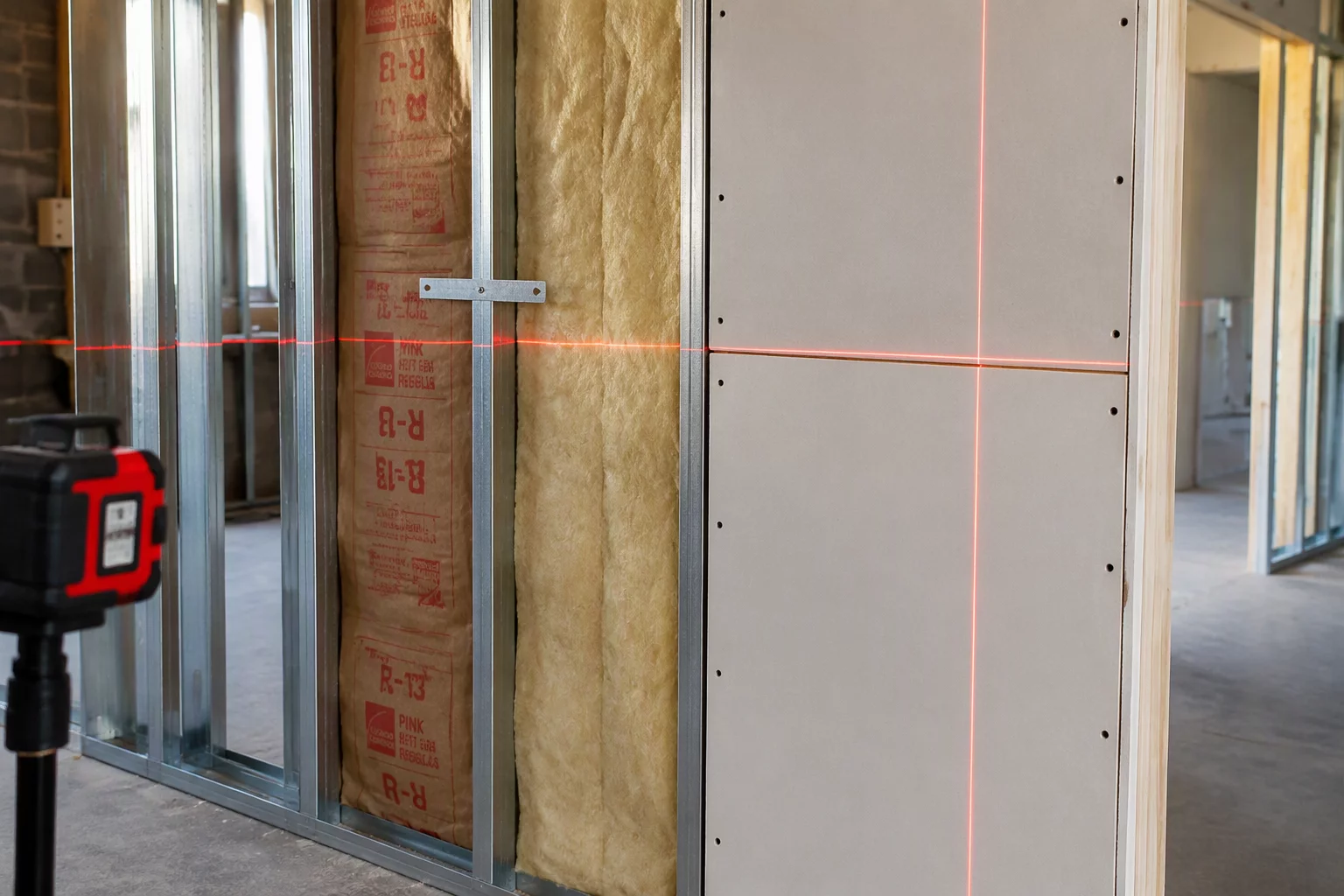
Traditional room-level estimating repeatedly stumbles when multi-trade interventions converge on a single partition wall. A living room wall backing into a plumbing chase or kitchen splash zone contains structural studs, insulation, damp-proofing, gypsum board, primer, and tile backing. When estimators assign these components to a single generalized room line item, adjacent trades frequently double-count the demolition or under-allocate boundary prep. The Surface Role Matrix resolves this fragmentation by dissecting every bounding plane into its discrete functional strata.
Within this matrix, each surface receives a primary structural attribution, a finish attribution, and a perimeter interface tag. For instance, an interior partition shared between a high-traffic hallway and a bathroom wet zone ceases to exist as a single planar quantity. Instead, the substrate belongs to the primary structural assembly zone, while each facing plane operates under its corresponding room exposure conditions. By recording these roles explicitly, scoping teams create an auditable lineage that mirrors physical jobsite sequencing.
- Matrix Structure
- 3-Tier Layered Interface (Substrate, Finish, Perimeter)
- Primary Application
- Multi-Trade Demolition & Surface Rebuild Scoping
- Typical Reconciliation Variance
- Reduced from 18.4% to under 2.1% across audits
- Standard Elevation Breakpoints
- Floor-to-48" (flood/wet), 48"-to-Ceiling, Inter-Floor Plenum
Governing Trade Interfaces at Physical Boundaries
Boundary disputes between trade contractors almost always occur at material junctions: baseboards meeting casing, drywall butting against masonry fireplaces, or resilient channel separating ceiling planes from acoustic partitions. The role matrix eliminates ambiguity by requiring an explicit boundary owner for every intersection. Whoever owns the boundary perimeter item must execute the preparation, masking, and transition detail before the succeeding trade touches the surface.
"An architectural boundary without a designated primary trade is the exact geographic point where change orders and audit disputes breed."
In practical deployment, field documentation specialists mark line-item items with spatial tags (e.g., [Z1-W03-SUB] for substrate framing versus [Z1-W03-FIN-PT] for cosmetic paint). Independent reviewers and adjusters immediately recognize whether line items correlate to genuine scope overlaps or distinct spatial tasks. This rigorous delineation speeds verification turnaround and preserves pricing integrity throughout the rebuild phase.
Frequently Asked Questions
Standard room summaries aggregate all materials into gross room dimensions, hiding which trade owns specific layers of a partition. The Surface Role Matrix isolates substrate, insulation, facing drywall, and trim into distinct role assignments, ensuring each trade line item correlates to its exact physical depth and plane.
No. While it interfaces seamlessly with digital Sketch tools and modern estimating platforms, the matrix is a spatial documentation logic. Estimators can execute it using standardized zone tags and elevation callouts on basic field tablet drawings or plan-view schematics.
Demising wall framing and internal cavity mechanicals are assigned to a shared structural substrate zone, while the opposing gypsum faces are scoped independently under their respective rooms to prevent overlapping unit counts.
A plane can hold multiple stacked roles - substrate, thermal envelope, and finish - but each role gets its own row so no trade inherits another trade's allowance.
The surface geometry stays fixed; only the role assignment splits. Painting and masking are recorded as separate rows referencing the same measured plane.
Discussion & Observations
Submit Methodology Observation
Related Methodology Protocols
 Methodology
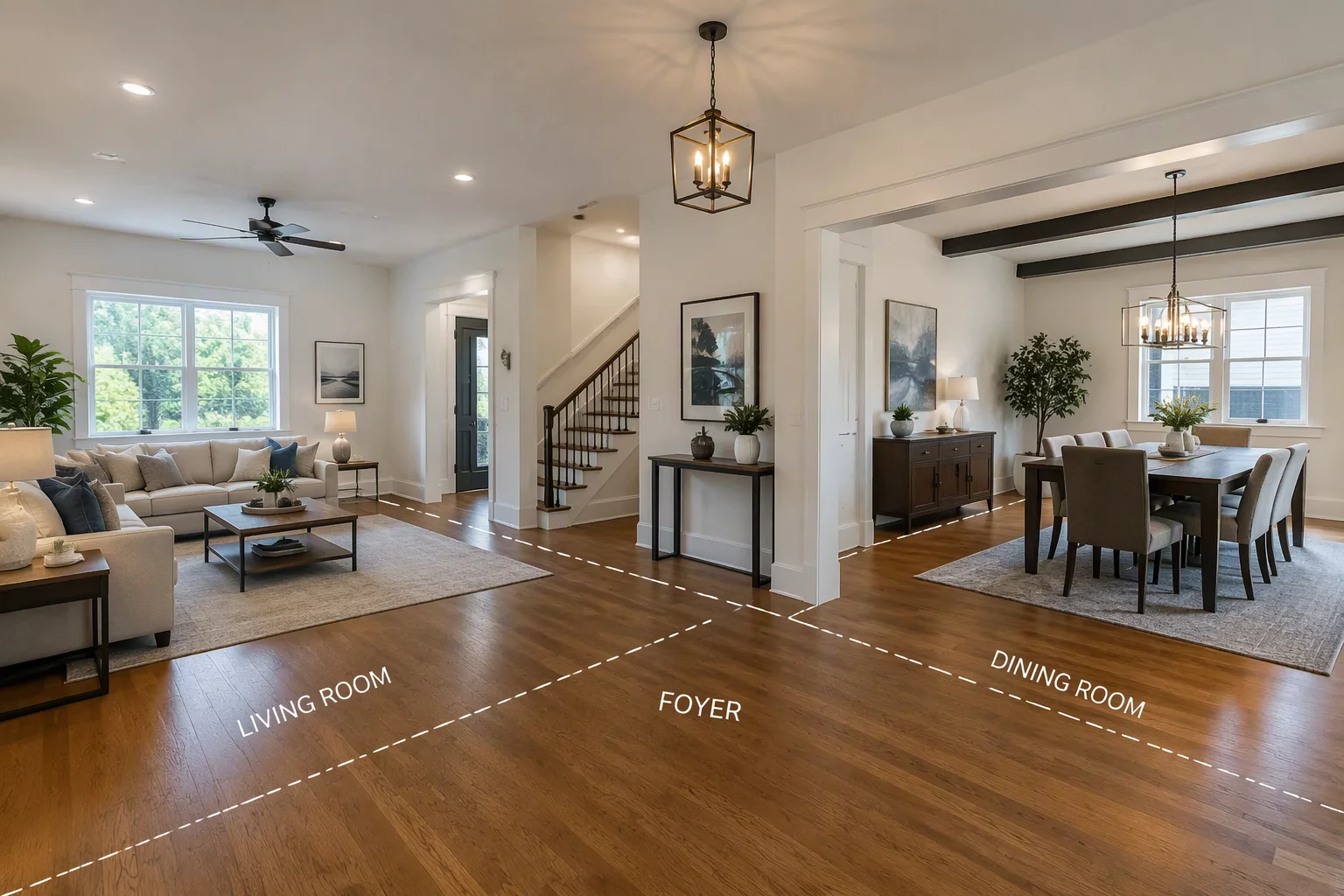
Decomposing Open Floor Plans Into Discrete Work Zones
Spatial division strategies for compartmentalizing vast continuous residential and commercial floor layouts into defensible estimating boundaries.
 Methodology
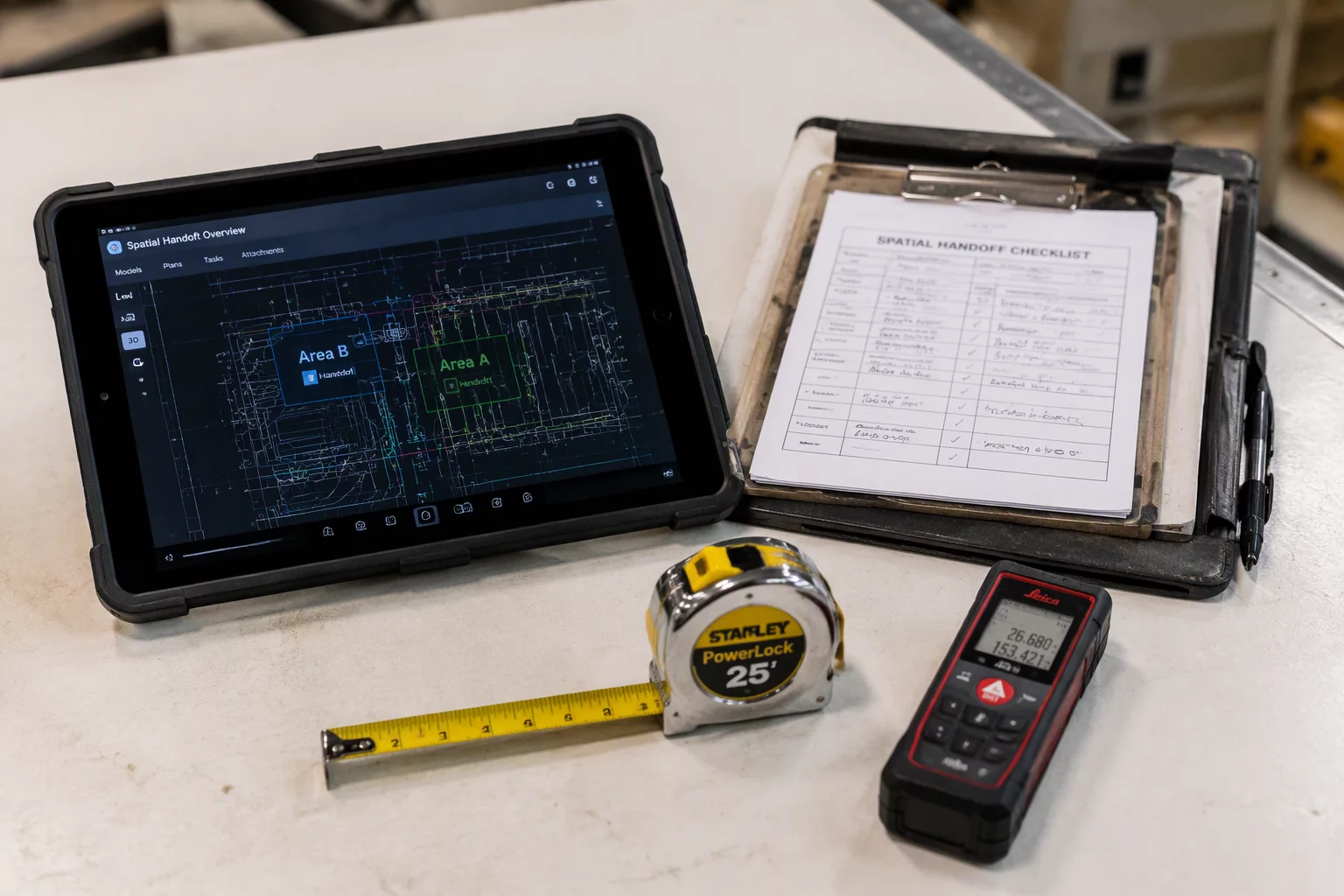
Establishing Spatial Handoffs for Field Documentation
Practical protocols for documenting material transition points and multi-trade physical interfaces on site sketches.
 Methodology
Reviewer-Friendly Zone Matrix Protocol
Structuring plan-view zone codes and estimating line-item notes for seamless auditor transparency and fast approvals.
Daniel Harwood
•Standardizing substrate versus finish plane ownership on shared wet wall assemblies has completely eliminated our recurring audit delays with third-party reviewers. Excellent technical breakdown.