 Specifications
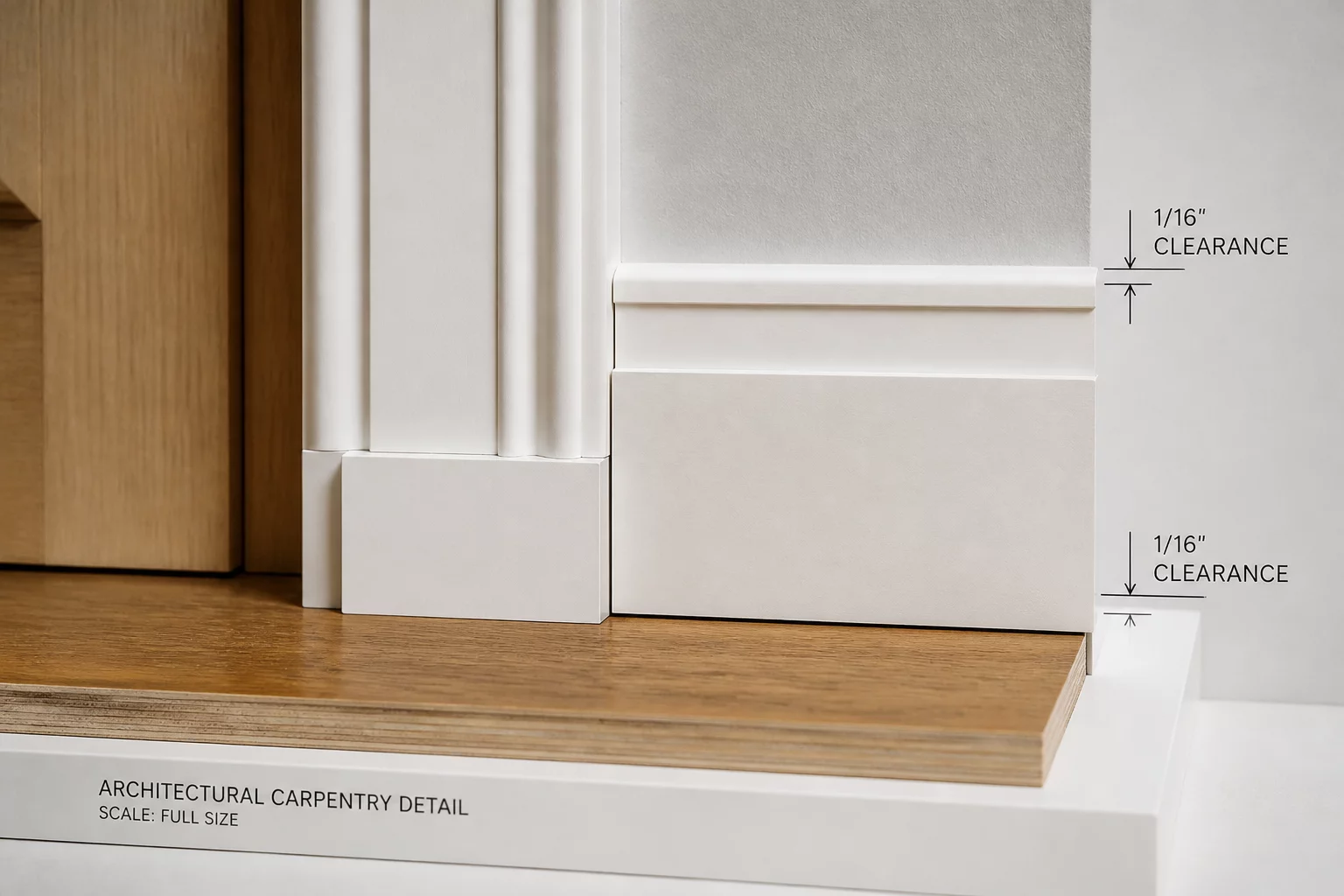
Baseboard & Perimeter Casing Transition Clearances
Guidelines for vertical drywall offsets, floor clearance gaps, and perimeter trim backing across multi-room flooring transitions.
Establishing clear vertical break lines, surface boundary rules, and defensible scope handoffs between uninterrupted wall drywall assemblies and ceiling planes.
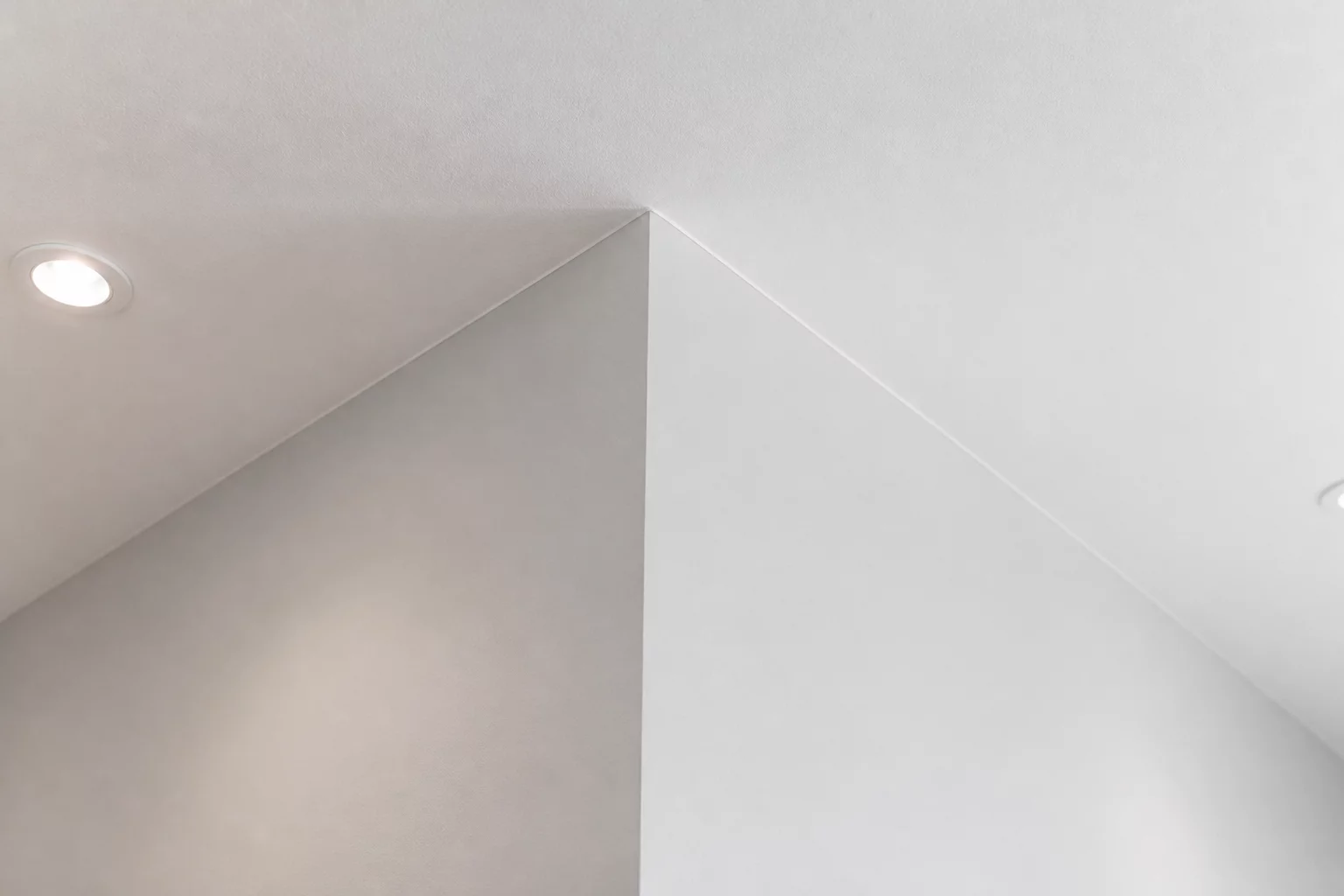
When structural frames support continuous gypsum board panels running vertically into horizontal ceiling assemblies, field estimators frequently encounter confusion regarding where wall scopes end and ceiling scopes begin. In standard residential and light commercial construction, drywall installers hang ceiling boards before wall panels, creating a physical overlap at the perimeter top plate. Despite this mechanical sequence, finish trades frequently treat the taped inside corner as a single unified surface. Establishing a consistent plane boundary protocol clarifies trade responsibilities, prevents double-billing for prime coats, and simplifies punch-list audits.
Our matrix enforces a strict plane-transition rule: the inside corner crease functions as the absolute boundary divide. All vertical drywall square footage terminates at the apex of the horizontal tape joint, while the overhead ceiling zone claims the horizontal plane extending inward from that crease. This separation holds true regardless of whether crown molding is scheduled or if smooth Level 5 taping spans the intersection. By maintaining distinct surface IDs in spatial documentation, estimators prevent quantity inflation and resolve conflicting subcontractor work orders.
Seasonal temperature changes and roof truss deflection routinely induce movement at ceiling-to-wall junctions. When roof trusses flex upward during winter months, rigid corner tape cracks unless framing crews incorporate floating interior corners or specialized expansion relief trims. Scopers and estimators must document whether the repair involves a standard paper-tape repair, a tear-away bead, or an elastomeric movement joint. Failing to specify the exact joint type leads to recurring cosmetic callbacks and disputed contractor supplements.
"Treating the ceiling junction as an independent spatial boundary eliminates 90% of trade friction between drywall finishers and prime-coat painters."
In open-concept areas where ceilings flow seamlessly across dining rooms, living areas, and hallways without dividing headers, mapping the ceiling plane becomes even more critical. Estimators should never artificially segment continuous ceilings along arbitrary furniture lines; instead, they must treat the overhead expanse as a single continuous repair zone while allowing perimeter walls to dock into it as discrete vertical sub-zones. This maintains structural truth in quantity schedules while respecting real-world drywall finishing workflows.
The drywall hanging and taping package owns the physical installation of the paper or fiberglass tape along the seam. However, for painting scopes, the corner crease serves as the division line: wall cutting-in belongs to the wall painter, while ceiling rolling terminates right at the horizontal edge of that crease.
Continuous ceiling planes that lack physical headers or bulkheads must be estimated as a single continuous surface area. Subdividing a continuous ceiling into theoretical room squares creates false perimeter cut-in labor charges and misrepresents actual paint application requirements.
Deflection relief beads or slotted drywall clips must be specified whenever interior partitions run perpendicular to engineered wood roof trusses with clear spans exceeding 24 feet, or in multi-story timber buildings subject to seasonal settling.
Wherever the span exceeds manufacturer deflection limits or crosses a structural movement joint; the spec records joint locations as transition zones.
Along the full seam run inside each zone; shared seams between two zones are attributed once to the primary zone.
Yes. A height change, soffit, or drop terminates the continuous ceiling zone and starts a new one at the break line.
Specifications
Guidelines for vertical drywall offsets, floor clearance gaps, and perimeter trim backing across multi-room flooring transitions.
 Specifications
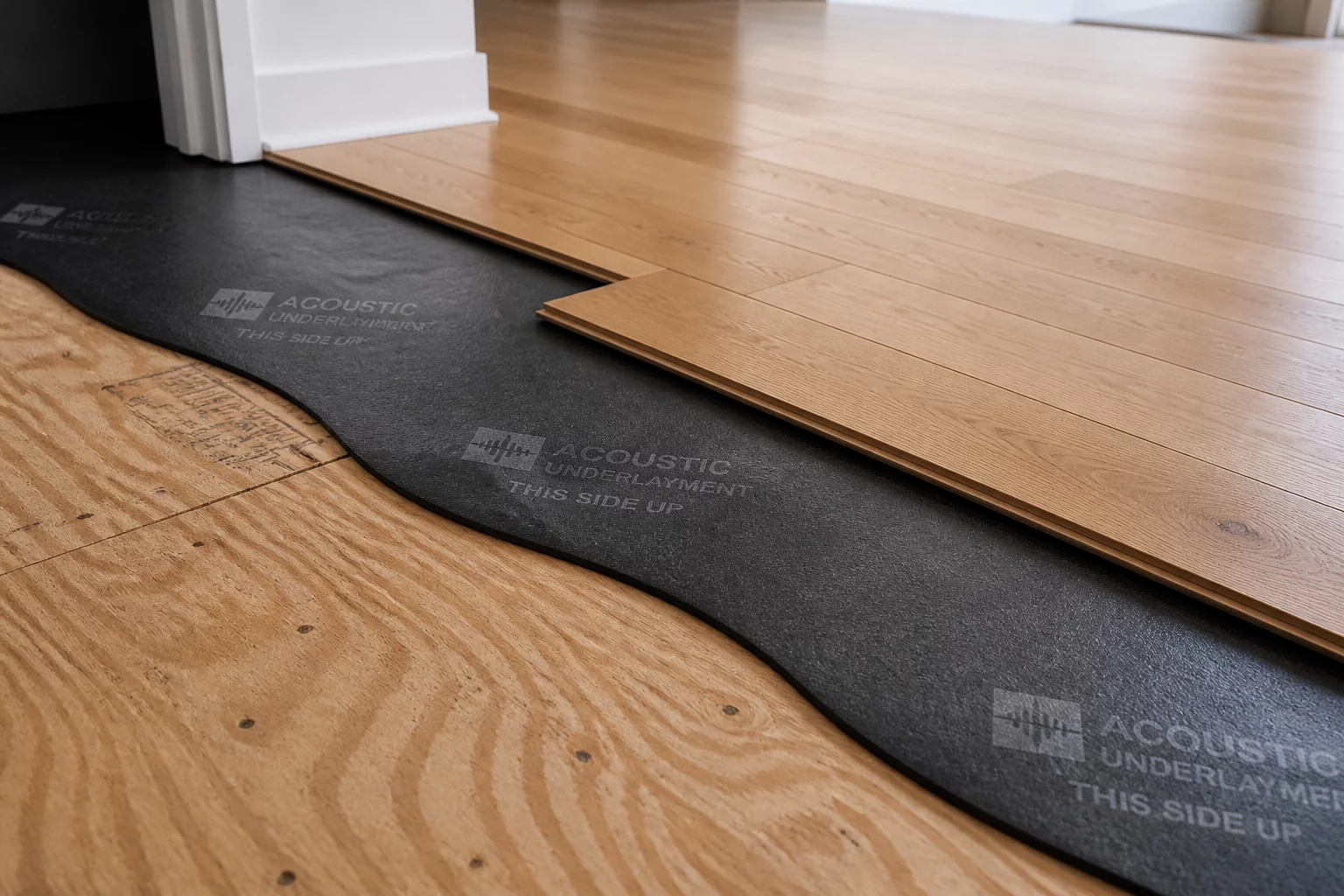
Delineating structural subfloor repairs from underlayment membranes and finish surface removal boundaries.
 Specifications
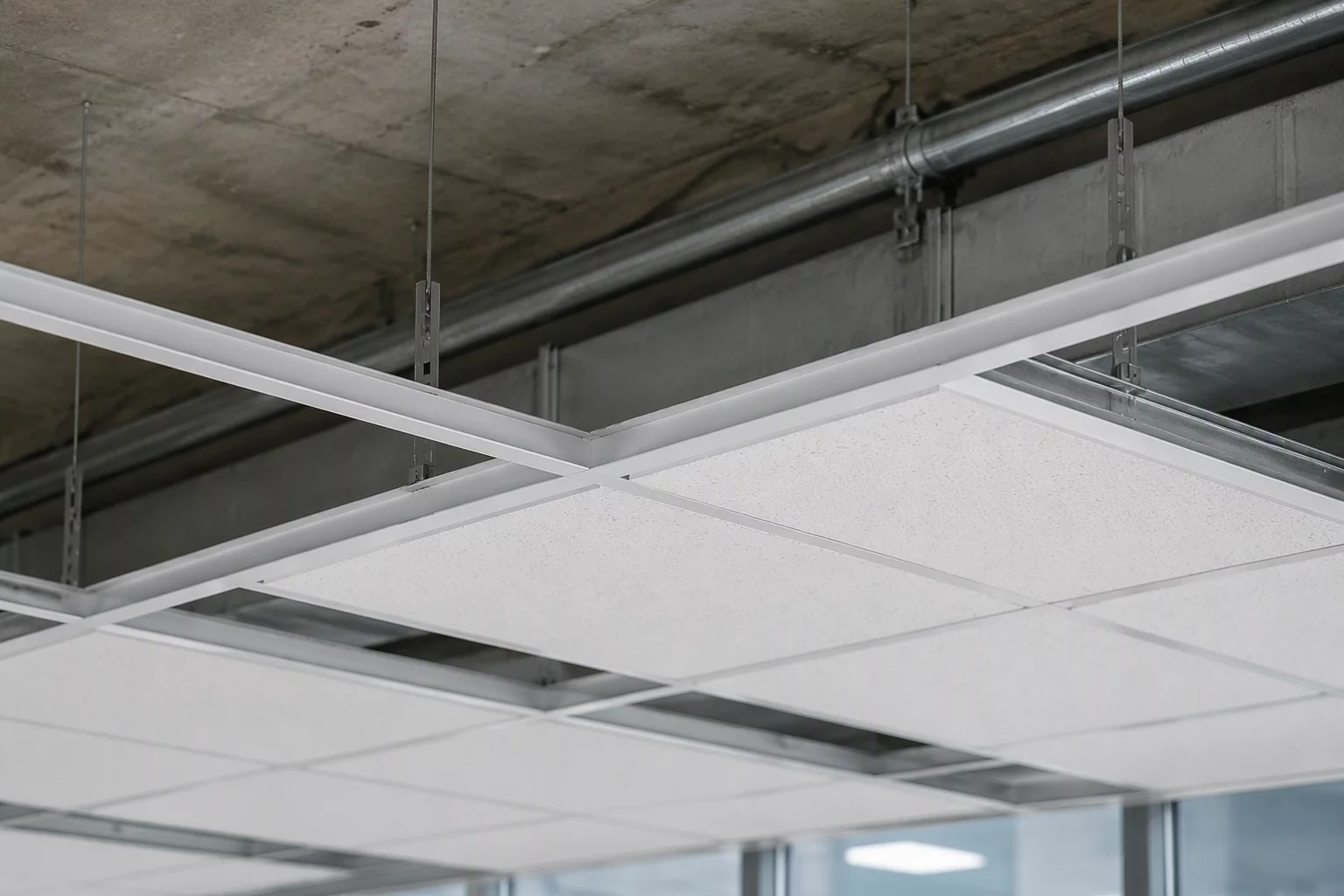
Spatial mapping protocols for drop ceiling grids, perimeter angle moldings, and seismic structural wire attachments.
Discussion & Observations
No observations yet. Be the first to leave a comment.
Submit Methodology Observation